
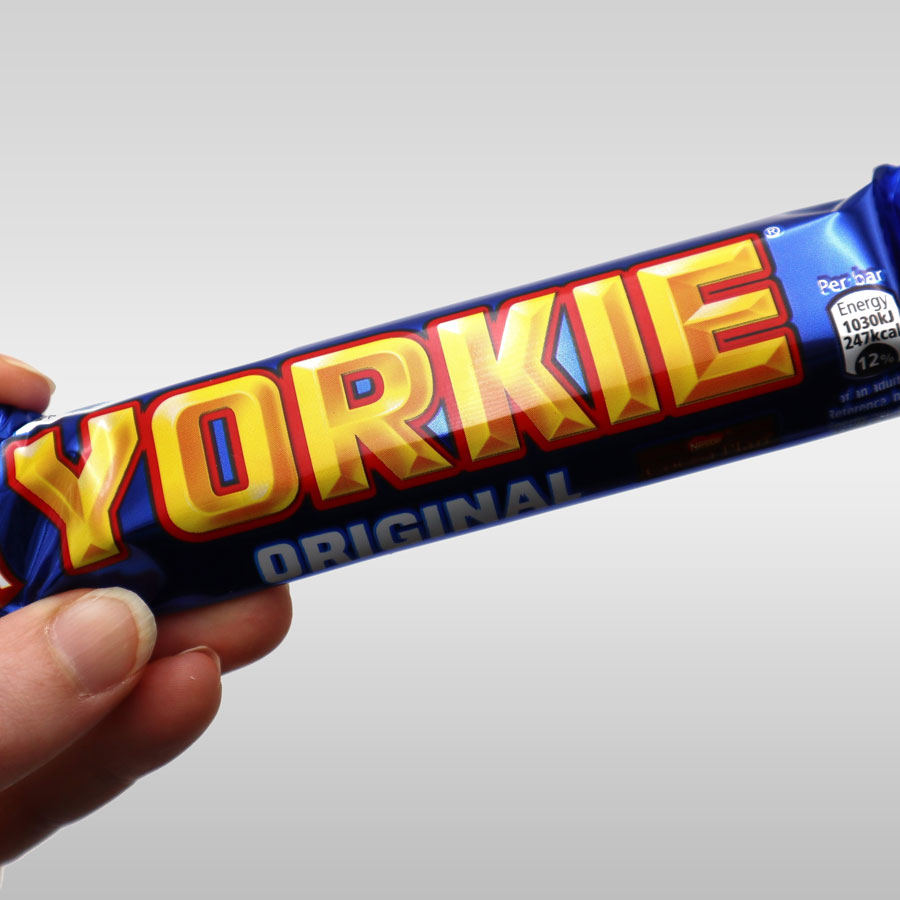
Launched in 1976, this year the Yorkie chocolate bar celebrates its 50th anniversary. And just like the trucker who featured in its early TV advertising, it’s been on quite a journey. Research reports held within AMSR tell the story…
From Launch to Success: The Making of Yorkie, 1976–1978
When Rowntree launched Yorkie in March 1976, it didn’t quite roar onto the market. It rumbled. The bar was new, the name was odd, and the advertising – a film featuring a lorry driver – was unlike anything else in confectionery. Early research reports held in the Archive show the campaign made an impression, but not always the one Rowntree intended.
1976: A promising idea with some early bumps
The first CRAM report reveals that distribution of the bar was uneven, and recall of the commercial was patchy. The message wasn’t always clear; the lorry driver was memorable, but the ad made Yorkie look like a filled snack bar – not a chocolate block. And because it fitted in his pocket, the product seemed quite slim. Some respondents were surprised when they finally bought it: “It’s just chocolate!”
The imagery also created tension. Although women warmed to the driver, some men felt threatened by him. A few white-collar respondents didn’t want to identify with a “manual/lunch-box” world. And the driver tearing into the bar with his teeth made Yorkie look “uncouth”, even “coarse”. In short, the ad was liked, but the brand didn’t yet have the cultural weight to correct the misunderstanding.
1977: The bar finds its audience
By late 1977, things had changed. Yorkie had taken 21% of the milk solid block market, and the lorry driver had become a cultural figure in his own right. Repeat viewing – and actual trial – resolved the early confusion. Once people tasted the bar, they understood it: thick, chunky, creamy, nostalgic.
The masculine imagery now worked in Yorkie’s favour. Young men admired the lorry driver; older men related to him; women found him attractive. The bar’s world – roads, cabs, bridges, private moments – became distinctive and emotionally resonant. Yorkie was no longer a misunderstood snack. It was a chunky, indulgent chocolate block with a personality.
1978: A brand strong enough to travel
The 1978 Easter Egg research showed just how far Yorkie had come. When respondents saw a Yorkie Lorry Easter Egg, complete with miniature Yorkie bars, they reacted with delight. The advertising imagery had become so strong that it could be lifted straight into a new category.
Men, who had long complained that Easter Eggs weren’t “for them”, now had something that felt right. Boys loved it. Even women recognised the fit. Yorkie’s world was coherent – but only when kept intact. Attempts to mix Yorkie with Quality Street failed: the two brand worlds clashed: Yorkie was private, indulgent, masculine; Quality Street was sharing, family, Christmas.
A brand that grew into itself
So although the Yorkie brand didn’t land perfectly at launch, its core idea – chunkiness, masculinity, indulgence – was strong enough to grow into something distinctive. The early issues forced Rowntree to clarify the product, strengthen the imagery, and lean into what made Yorkie different. The brand didn’t just launch in 1976. It learned, adapted, and then arrived.
Sustenance, decline and recovery
Fifty years on, we see a brand that held a strong market position for several decades, before experiencing a decline. But a re-set has brought about a revival in recent years, driven by product innovation, the return of television advertising, and a shift toward ‘sharing’ and ‘duo’ formats.
The quantitative TGI data held within AMSR allow us to examine user numbers from 1987 onwards. At that point Yorkie had 13.2m consumers across its different variants – and, sure enough, men outnumbered women amongst them: 7.1m to 6.1m.
The masculine-oriented positioning and marketing continued for many years, one example the “not for girls” tagline in the early 2000s. By the mid-noughties however, the brand was slipping: user numbers fell from 10m in 2002 to 3.9m in 2012. But a resurgence began, and by 2022 the figure was a healthier 6.5m.
Today’s brand portfolio boasts a range of flavours and maintains its reputation for thick, solid chunks of chocolate. New variations include the Yorkie Salted Caramel Pretzel Duo, launched in March 2026 as part of the 50th anniversary celebrations.
Yorkie’s gender profile has remained consistent throughout the highs and lows – men still make up 55% of its users, whereas other brands – for example Cadbury’s Dairy Milk – have more female consumers. The original positioning of this much-loved brand has endured to this day.
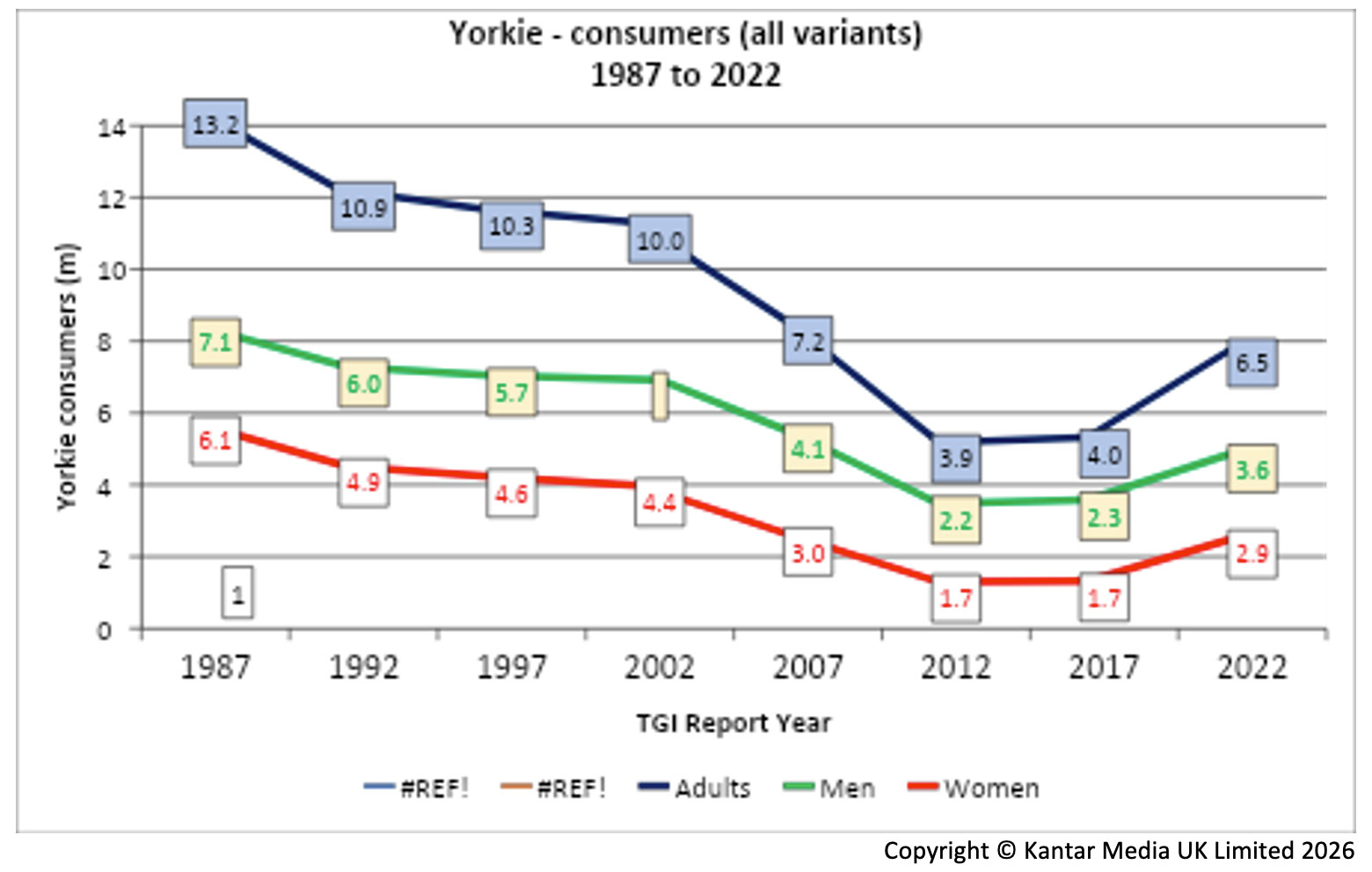
TGI (Target Group Index) is a continuous survey which has been carried out in Great Britain since 1969, based on 25,000 adults per annum, who provide information on their use of all major products, brands and services. Media exposure, attitudinal and demographic data are also included. Kantar, who own and operate TGI, have made major donations of data to AMSR. To explore the TGI archive within AMSR, click here:
Target Group Index – The AMSR Online Archive (oclc.org)
All data copyright © Kantar Media UK Limited 2026. All use of TGI data is subject to Kantar Media UK Limited’s terms and conditions.
Contributed by the Stories team
Date posted: 26th June 2026
Photo: SiljeAO/Shutterstock.com