

“There’s no point buying £40 shoes for a £400 suit” says a respondent in a 1989 study for Adidas, who were looking to launch an international lifestyle brand (including shoes). The report, held within AMSR, summarises the UK qualitative research, and reveals a late 1980s world of a group of people for whom fashion was very important – the respondents are young, well-off, fashion-conscious men and women.
For these people personal fashion was much more a statement of attitude rather than age. They were individualists with a strong personal style. They knew their lifestyle priorities and where fashion fitted within them. They had strong requirements from their clothes. All groups emphasised three important categories of fashion style, whether Casual/’Slopping About’ (‘passive’ dress), Lively/Individualistic/Creative (‘active’ dress) or Smart/Classic (‘business’ wear). They had strong ideas of where they liked to shop and brands that they aspired to (Jean Paul Gaultier, Chanel, Red or Dead…). There were also brands they ‘wouldn’t dream of buying’ (eg for younger females: What She Wants, C&A, Etam, Evans, Top Shop, BHS, Littlewoods; for older men (defined as 25-40!): Top Man, Burtons, Chelsea Man, C&A, Byrite, Principles). It all brings to mind the hedonism of the late 80s when we bought new (preferably ‘designer’) suits for every occasion – the wider the shoulders the better!
So when did it all change? When did women start mixing Chanel with Zara? Men start to wear trainers with suits? When did shorts and sportswear become so acceptable? And tattoos…? When was the last time someone said: “There’s no point buying £40 shoes for a £400 suit”?
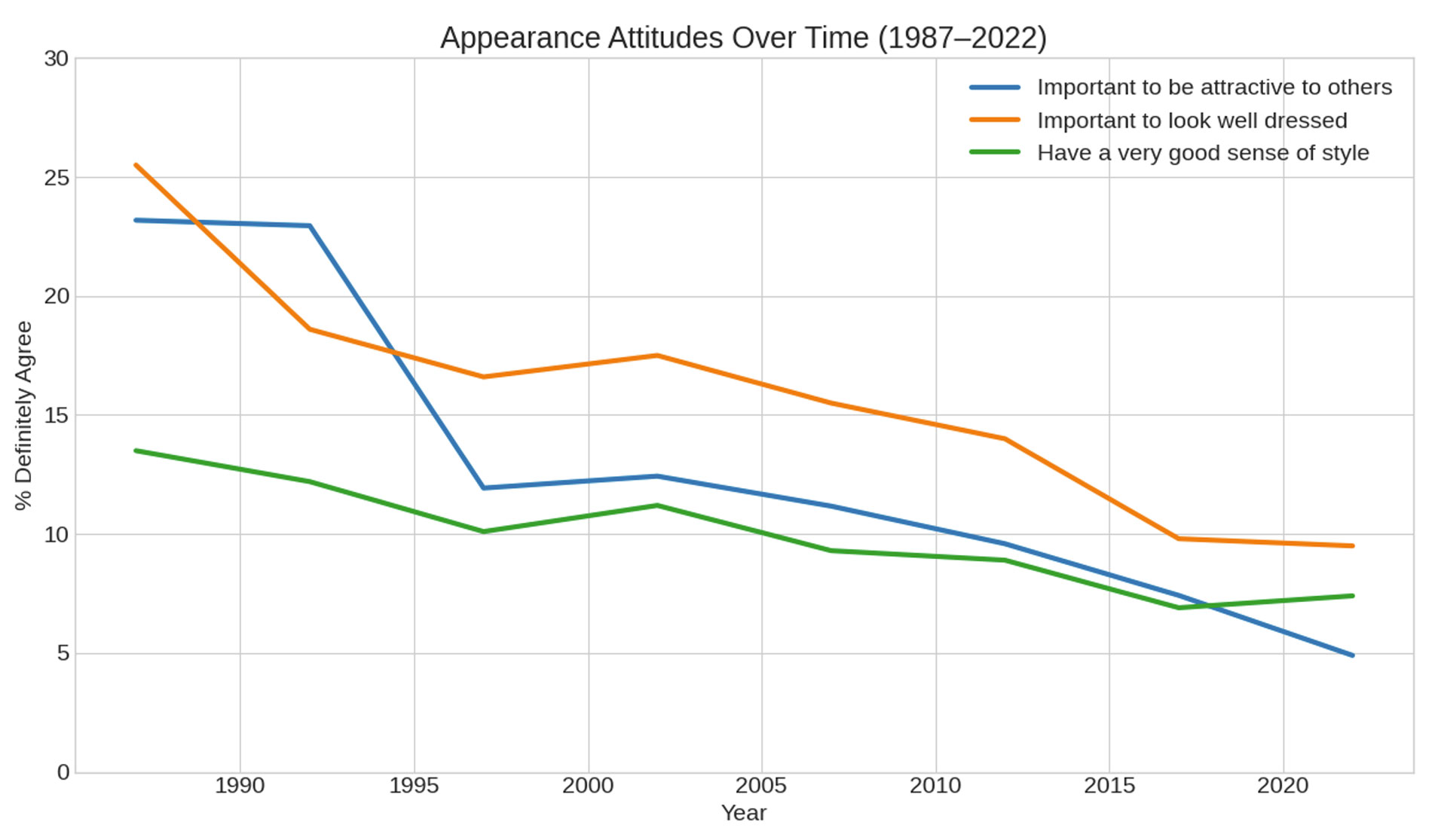
We can look at TGI data – also held within AMSR – for some clues. Let’s first of all look at three very revealing statements:
- It is important to be attractive to others
- It is important to me to look well dressed
- I have a very good sense of style
Here’s the track of % Definitely Agree from 1987-2022 – look at those declines! Under 10% of people definitely agree with these statements now, whereas in 1987 it was 25%.
However, that is maybe just cherry picking – if we add some others: “I like to stand out in a crowd” and “It is important to keep young looking” (see chart below), the trends on the new statements are much flatter. This may be that exhibitionism has nothing to do with dress sense and that keeping young-looking is less important in an aging society. But nevertheless the general declines are significant.
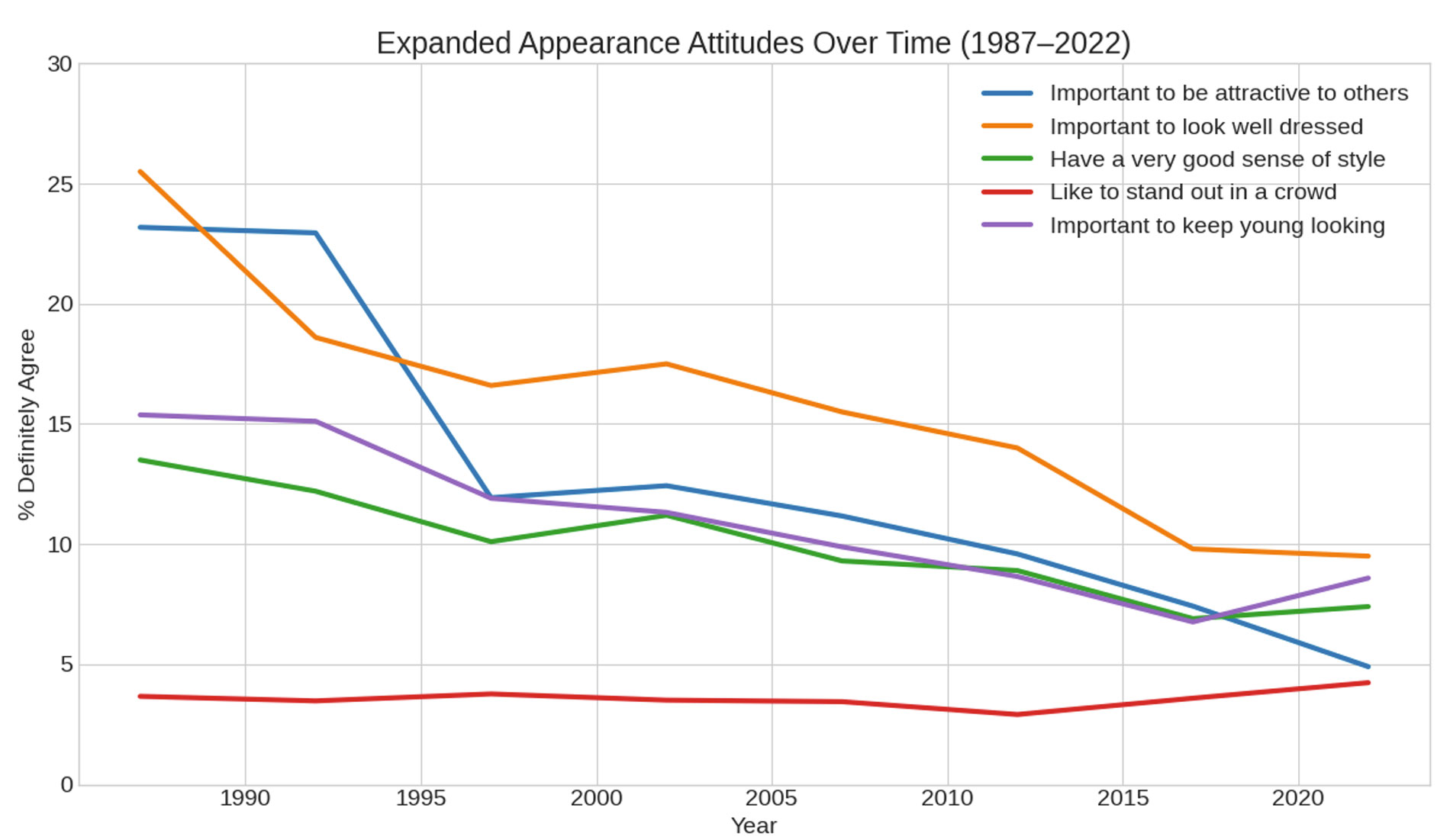
It does seem that 1989 was about the point at which ‘designer’ and ‘smart’ dressing went into decline – and of course the pandemic and WFH put the lid on it – it’s now quite common to see people walking their dog having clearly just thrown a jacket on over their pyjamas. Where will it end?
Contributed by: Phyllis Macfarlane
Date posted: 28th April 2026
Photo: Bearfotos/Shutterstock.com